Medicure Could File for FDA Approval Earlier Than Expected

Medicure (TSXV: MPH) could potentially file its New Drug Application (NDA) with the FDA for MC-1 much earlier than previously anticipated!
Although Medicure's Phase 3 clinical trial for the treatment of pyridox(am)ine 5'-phosphate oxidase (PNPO) deficiency has an estimated primary completion date of September 2027, Medicure's CEO recently indicated that the FDA has provided guidance regarding the process of filing an NDA based on interim clinical trial data.
MPH won't need to wait until September 2027 for all 10 patients to complete their 52 weeks of treatment before beginning the FDA application process. Management indicated that one patient has already completed three years of treatment, another has completed over two years of treatment, and several have completed 12 months of treatment.
MC-1 is a pharmaceutical-grade formulation of pyridoxal 5'-phosphate (P5P), a molecule with extensive historical evidence supporting its effectiveness in treating PNPO deficiency.
Unlike most biotechnology companies developing experimental drugs with unproven mechanisms of action, Medicure is developing a pharmaceutical-grade version of a molecule that is already being used to treat this devastating genetic disorder.
A 2025 systematic review identified 10 untreated siblings of patients subsequently diagnosed with PNPO deficiency who died at a median age of approximately 33 days. Their siblings who received P5P treatment survived. However, it is well documented that the seizures return after P5P treatment is interrupted or even after a single missed dose.
Currently, patients who require P5P must rely on dietary supplement-grade formulations that can present challenges involving purity, dosage consistency, and chemical stability. Medicure's MC-1 is designed to address these significant unmet medical needs by providing a standardized pharmaceutical-grade formulation.
Medicure has extensive previous clinical experience with MC-1. Approximately 1,500 patients received MC-1 during Medicure's large Phase 3 cardiovascular clinical trial in 2008, providing the company with a substantial historical safety database and pharmaceutical manufacturing experience that few biotechnology companies developing treatments for ultra-rare diseases possess.
Medicure's current Phase 3 clinical trial is being led by Dr. Phillip L. Pearl, Director of Epilepsy and Clinical Neurophysiology at Boston Children's Hospital and Professor of Neurology at Harvard Medical School. Dr. Pearl is a former president of the Child Neurology Society, an internationally recognized expert in inherited metabolic epilepsies, and the author of a textbook on the subject. In 2022, Dr. Pearl co-authored a publication highlighting the urgent unmet need for pharmaceutical-grade vitamin therapy in pyridoxine-dependent epilepsies.
MC-1 has FDA Fast Track and Orphan Drug designations. The FDA's Rare Disease Evidence Principles announced in 2025 could potentially provide additional regulatory flexibility for treatments targeting ultra-rare genetic disorders.
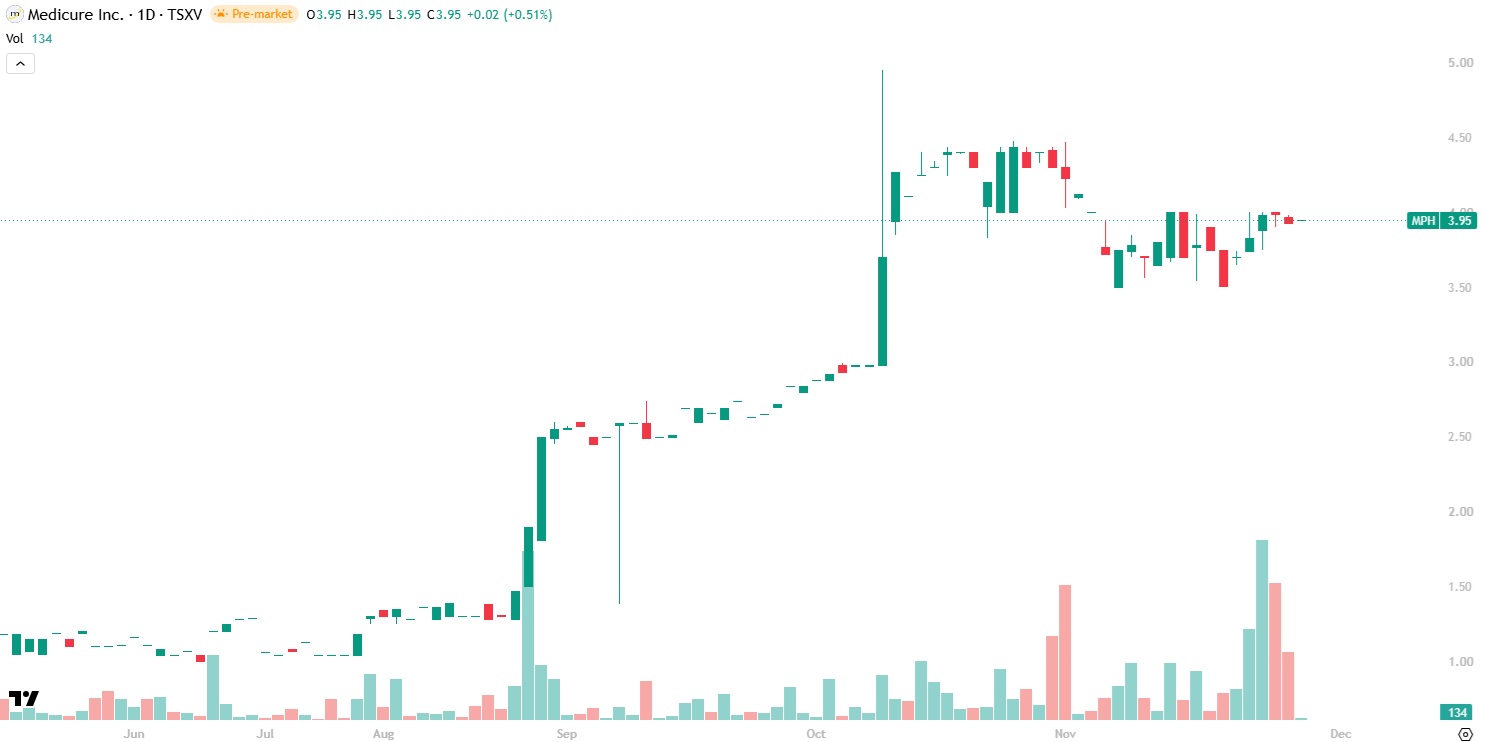
If Medicure successfully obtains FDA approval for MC-1, it will be awarded a Rare Pediatric Disease Priority Review Voucher (PRV), which it could monetize for approximately US$205 million based on the latest comparable transaction. This represents approximately 7.1 times Medicure's current market cap at $3.95 per share of roughly US$28.86 million, before assigning any value to Medicure's existing commercial pharmaceutical businesses or the future sales of MC-1.
There will never be another opportunity in the biotech industry with such massive upside potential and little/no downside risk.
Past performance is not indicative of future results. NIA is not an investment advisor and does not provide investment advice. Always do your own research and make your own investment decisions. NIA’s President has purchased 87,000 shares of MPH and intends to buy more shares. This communication is for informational and educational purposes only.